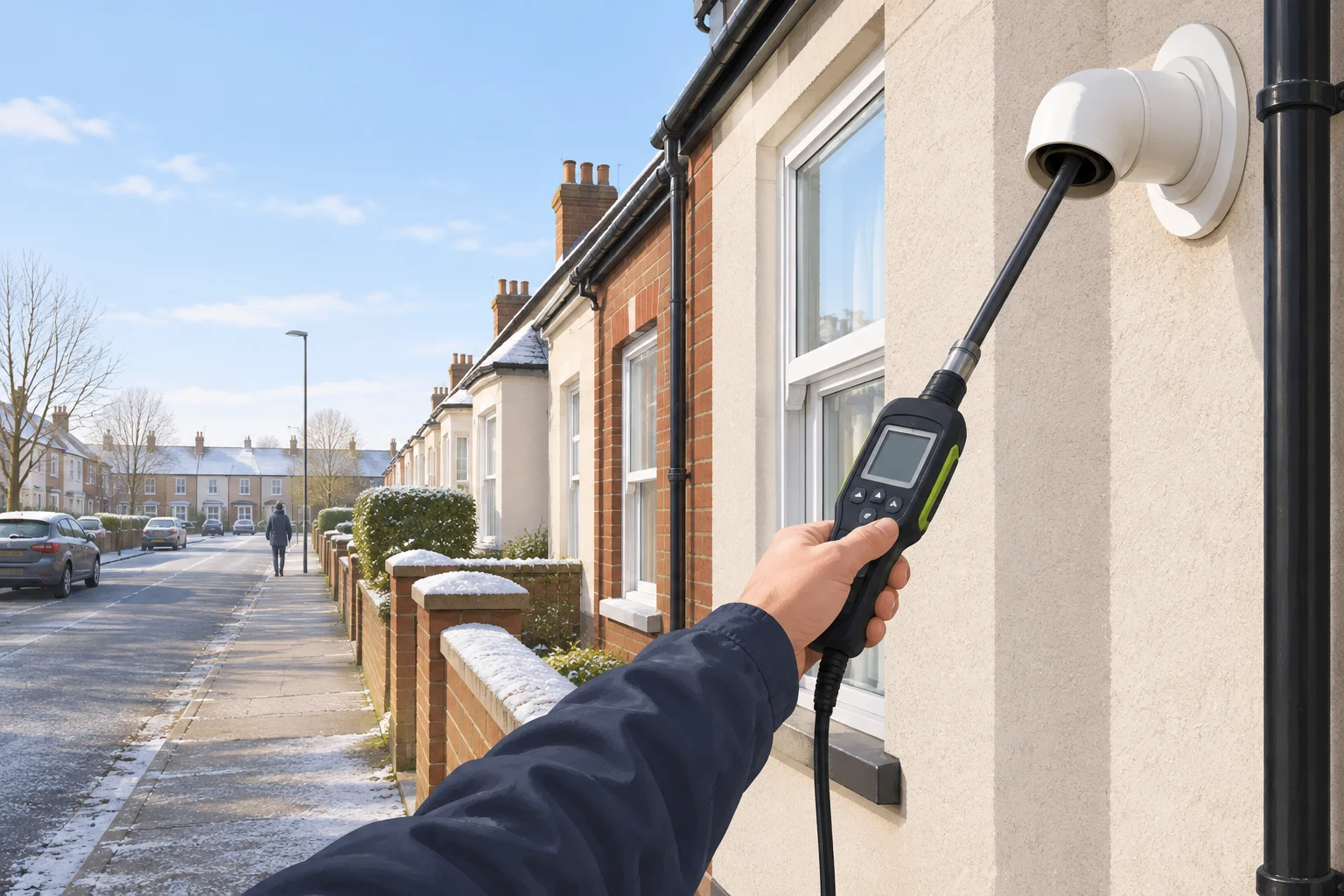
A landlord gas safety check is simple on paper. In practice, queries often come from a record with something missing: an address, a registration number, a note of what was done about a defect. A gap like that can mean a second visit, a delay in getting the record to the tenant, or a landlord who isn't sure they're covered. This checklist is for both sides of the visit. It covers the landlord getting the flat ready and the engineer making sure the paperwork is complete. It covers England, Scotland and Wales. Northern Ireland has separate rules that this post doesn't cover.
What the law asks of a landlord
Under regulation 36 of the Gas Safety (Installation and Use) Regulations 1998, a landlord must make sure any relevant gas fitting and any flue serving it is maintained in a safe condition. The aim is to prevent injury to anyone lawfully living there. It applies to premises lived in under a lease or licence for money or money's worth, which includes a rented flat. An appliance or flue used only in a non-residential part of the premises is excluded.
The check and any work on the gas fittings must be done by, or by an employee of, someone in a class of people approved by the HSE (Health and Safety Executive). GOV.UK puts it as a Gas Safe registered engineer doing an annual check on each appliance and flue.
Before the visit: what the landlord should sort out
The regulations say that what a tenant does or agrees to do about maintaining or checking the gas fitting doesn't count when deciding whether the landlord did their duty. The one exception is giving access for the check. So access is the main thing to arrange.
Give the tenant clear notice of the date and time, and confirm it in writing.
List every gas appliance and flue in the flat, including any the tenant might not think of as part of the gas system.
Tell the engineer about any problems the tenant has reported, such as a boiler that cuts out.
Have the previous record to hand, so the engineer can see what was found last time.
Check the dates. Work out when each appliance and flue was last checked and when the next deadline falls.
Sleeping rooms
A landlord must also make sure no relevant gas fitting is installed in a sleeping room where that would break regulation 30(2) or (3). Rooms used for sleeping since before the 1998 Regulations came into force are exempt. In a flat, where one room may serve as a bedroom and living space, it is worth looking at where each appliance sits.
What the engineer examines
Under regulation 36(9), the safety check must include, but is not limited to, an examination of the matters in regulation 26(9)(a) to (d): the effectiveness of any flue; the supply of combustion air; the appliance's operating pressure or heat input, or both where necessary (or its combustion performance where checking those isn't reasonably practicable); and its operation, to make sure it is working safely.
Don't rely on a fixed shopping list of tests from anywhere other than the regulation and your own training. The regulation sets a minimum, and a good engineer notes anything else that affects safety in that flat.
What the record must contain
The regulations call it a record. Landlords and tenants usually say certificate, and GOV.UK and the HSE both say gas safety check record. Whatever name you use, regulation 36(3)(c) says it must show:
the date each appliance or flue was checked
the address of the premises where it is installed
the name and address of the landlord, or their agent where that applies
a description and the location of each appliance or flue checked
any safety defect found
any remedial action taken
confirmation that the check complies with regulation 26(9)
the name and signature of the person who did the check
the registration number of that person, or of their employer, with the HSE-approved body
The HSE's guidance on gas safety records gives a shorter list of minimum contents, so use the regulation's list as your checklist. Fill in the location of each appliance properly. In a flat, 'kitchen' is better than 'boiler', and 'bedroom 2 airing cupboard' is better than 'cupboard'.
If you find a defect
The HSE says the record should be issued when the checks are finished. It should not be held back because concerns were found, and it should not wait until remedial work is done. The HSE calls the record a living document that the landlord should add follow-up records to. So record the defect and what you did, and issue the record. If the fix happens later, a follow-up record shows it.
After the visit: copies and storage
Existing tenant: they must get a copy within 28 days of the check date.
New tenant: they must get a copy of the last record for each appliance or flue before they occupy the flat. GOV.UK tells tenants to expect it before they move in, or within 28 days of the check.
Short stays: if the tenant's right to occupy is for no more than 28 days, a copy can instead be displayed prominently in the premises.
No gas appliance in the tenant's rooms: the landlord may display a copy prominently instead. It must say the tenant can have their own copy on request, and the landlord must then supply one as soon as practicable.
Inspection on request: a tenant must be allowed to inspect the record on reasonable notice.
Signature on copies: a copy given to a new tenant need not reproduce the engineer's signature, but only if it states that a signed copy can be inspected on request at a specified address.
The landlord must keep the record until there have been two further checks of that appliance or flue. If the appliance or flue is removed, keep the record for 2 years from the date of its last check. The HSE summarises this as at least two years.
Timing: when to book the next check
Each appliance and flue must be checked within 12 months of being installed, and then at intervals of no more than 12 months. For a new lease, each must have been checked within the 12 months before the lease starts, or within 12 months after installation, whichever is later.
Regulation 36A allows some flexibility. A check completed within the 2 months ending with the deadline date is treated as made on the deadline date. The deadline date is the last day of the 12-month period in which the check is due. So if the deadline is 14 March, a check done in the two months before that still counts as 14 March, and the next deadline stays on the same date. A landlord can also check within the 2 months after the deadline instead, but only once per appliance or flue, and only to line its deadline up with another appliance or flue in the same premises.
Related safety points to mention
These sit outside the gas check, but GOV.UK lists them for landlords. A carbon monoxide alarm is required in any room with a solid fuel burning appliance, and a smoke alarm is required on each storey. The government's How to rent a safe home checklist also tells tenants to ask whether they have seen a gas safety certificate and where the gas supply can be switched off in an emergency. Showing the tenant that switch-off point during the visit is a quick way to help.
This is general information, not legal advice. Check the linked regulations, or ask the HSE or a legal adviser, if your situation is unusual. This post doesn't cover penalties, and we haven't confirmed any here.
Wrap-up
A complete record has the right details, covers every appliance and flue, and reaches the tenant on time. Landlords can prepare by arranging access and tracking dates. Engineers can work through the nine items before leaving the flat. If you use Quidjob to run your jobs, you can keep the visit date, the address and your invoice together, so the details are easy to find when a landlord rings about the record. For a wider view of the rules, read our guide on landlord gas safety and EICR rules.