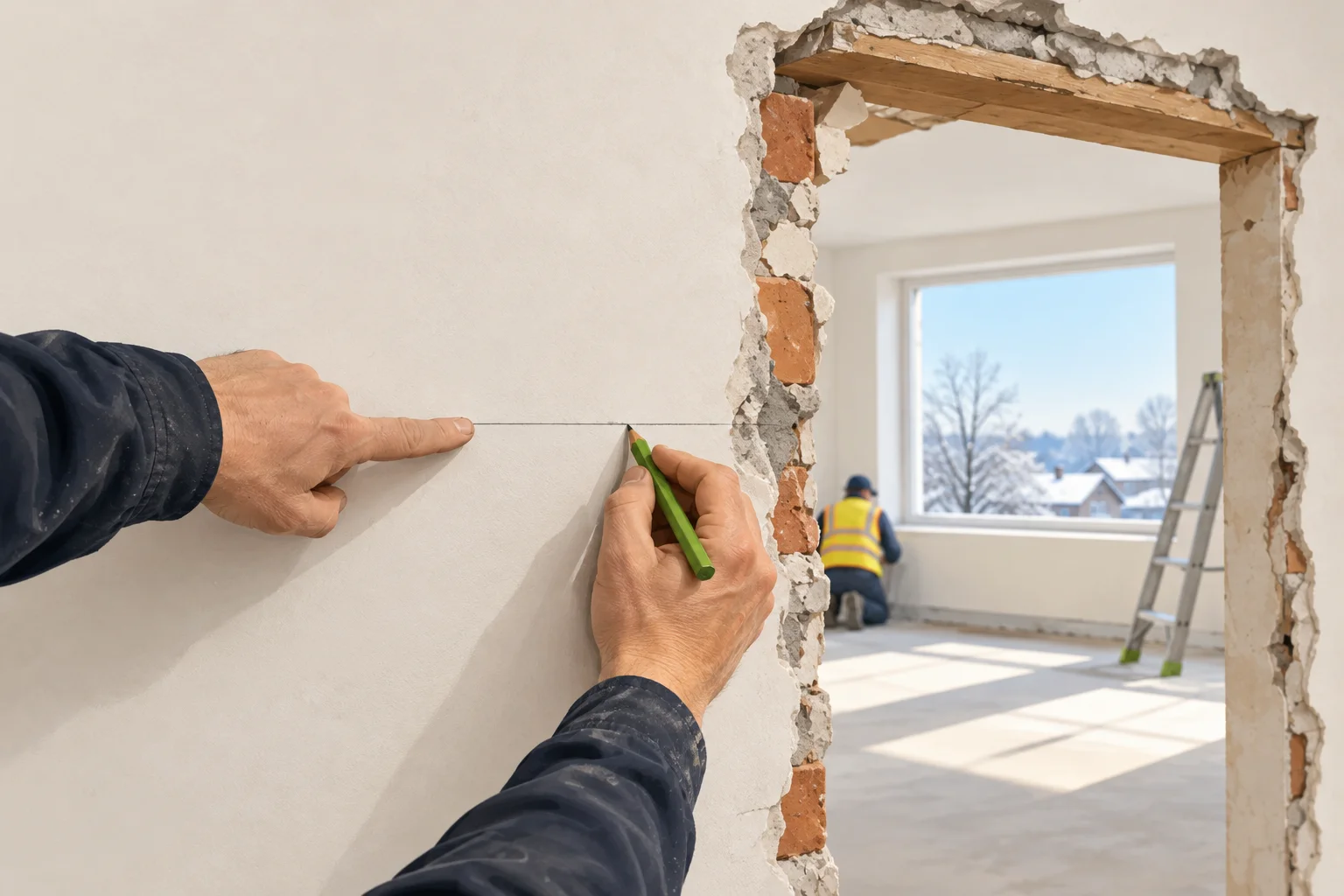
You open up a wall and find old pipework that has to come out. Or the customer sees the half-finished room and says, "While you're here, could you also..." The job grows. The price in your quote doesn't. If you just carry on and sort it out at the end, you are relying on the customer remembering the conversation the same way you do. Often they don't.
A variation is a change to the agreed job: extra work, less work, or different work. This post shows a simple way to record one, with the customer's sign-off, before you pick up a tool. It takes a couple of minutes and it is the best protection you have when the bill is questioned.
Why a quick "yes" on site isn't enough
A spoken agreement can be a real agreement. The trouble is proving what was said. "I thought that was included" and "you never gave me a price" are the two most common replies to an extra on an invoice.
For homeowners, the law adds to the problem when a price isn't fixed. Under section 51 of the Consumer Rights Act 2015, where a contract doesn't fix a price or say how one is to be fixed, the consumer must pay "a reasonable price for the service, and no more". Section 51(3) says what is reasonable "is a question of fact". In plain terms: if you never priced the extra, the amount can end up being argued over, and you may not get what you think it was worth.
There is also a rule about what you tell customers. Under section 50 of the same Act, things said or written to a consumer by or for the trader about the service can be treated as terms of the contract, if the customer took them into account. So what you put in your quote matters, and so does what you put in writing about a change to it. The Act's explanatory notes on section 50 say certain pre-contract information "cannot be altered unless the parties expressly agree otherwise". Those notes are commentary, not the Act itself, but they point the same way: if something changes, record that the customer expressly agreed to it.
What a good change note contains
Keep it short enough that you will actually do it on site. One page, or one message, is plenty. It should say:
The job and the date. The customer's name, the address and which quote or job it changes.
What has changed and why. For example: "Corroded copper pipe found behind bath panel. Replace 3 metres and reconnect." Plain words, no jargon.
The extra price. Labour and materials, and VAT if you are VAT-registered. A fixed figure is best. If you can't fix one, give a day rate or hourly rate and a cap, such as "not to exceed £X without asking you first".
The effect on timing. Does it add half a day? Will you need to wait for a delivery? Say so.
What isn't included. If the extra might lead to something else, say that anything further will be agreed separately.
Sign-off. The customer's signature, or a reply by text or email saying "Yes, go ahead", with the date.
A simple way to do it on site
Stop before you start the extra. Finish what is safe to finish, but don't begin the new work yet. It's much harder to ask for agreement afterwards.
Show the customer the problem. A photo on your phone helps. It also gives you a record of why the extra was needed.
Work out the price there and then. Don't say "a couple of hundred, probably". If you need to check the cost of materials, say you will message the figure within the hour.
Write the change note. Use the list above. Read the price out loud as you write it.
Get the sign-off. A signature on paper is fine. A text or email reply that clearly says yes is also a written record. Keep it with the job.
Do the work, then invoice the extra clearly. Show it as its own line, such as "Variation 1: replace corroded pipe, as agreed on 12 March", so it matches the note.
A worked example
These figures are made up to show the idea. Say you quoted £2,400 to refit a bathroom. Once the old bath is out, you find the waste pipe is cracked and the wall behind it is damp. You tell the customer, take a photo, and write: "Replace cracked waste pipe and renew two sections of wall board. Extra £380 (labour £220, materials £160). Adds half a day. Any further extra work to be agreed separately." The customer replies by text: "OK, go ahead." You save the message with the photo.
At the end the invoice shows £2,400 for the original work and £380 for the variation, a total of £2,780. If the customer questions the £380, you have the date, the reason, the figure and their reply.
When the customer says they'll pay "whatever it costs"
Some customers wave you on: "Just do it, I trust you." That is friendly, but it still leaves the price open. Reply with a quick message: "Thanks. Just to confirm, the extra will be about £380 including materials. Shout if that's a problem." If they don't object, you have at least recorded the figure you gave. Better still, ask for a clear "yes".
A word on extra charges and consumer rules
There are also rules on additional payments in consumer contracts. Regulation 40 of the Consumer Contracts (Information, Cancellation and Additional Charges) Regulations 2013 says no payment is due on top of the agreed price for the trader's main obligation unless the trader got the consumer's express consent before the consumer became bound by the contract. If you take an additional payment that wasn't payable under that regulation, the contract is treated as requiring you to pay it back. The regulation has exceptions, and whether it applies depends on the type of contract and how it was made, so read the official guidance on the regulations or ask an adviser about your own situation. The simplest habit is the one above: get clear, express agreement to the extra price before you do the work.
This is general information, not legal advice. Business customers are a different case, but the habit is the same: a written, signed-off change protects you with anyone.
Make it a habit
Put a line in every quote saying that changes to the job will be agreed and priced in writing before the work starts. Customers then expect it, and it feels routine rather than awkward. If you want help pricing the original job with a margin for surprises, see our guide on how to price a job. For larger jobs, deposits and stage payments can also keep cash coming in as the work grows.
If you use Quidjob, you can send the extra as a short quote from your phone while you're still on site, and keep it with the job so it's there when you invoice.
Wrap-up
Stop, show, price, write it down, get a yes, then start. It adds a few minutes to the day and it can save you a disputed invoice. Whatever the customer, an extra with a clear price and a dated sign-off is far easier to get paid for than one you only talked about.