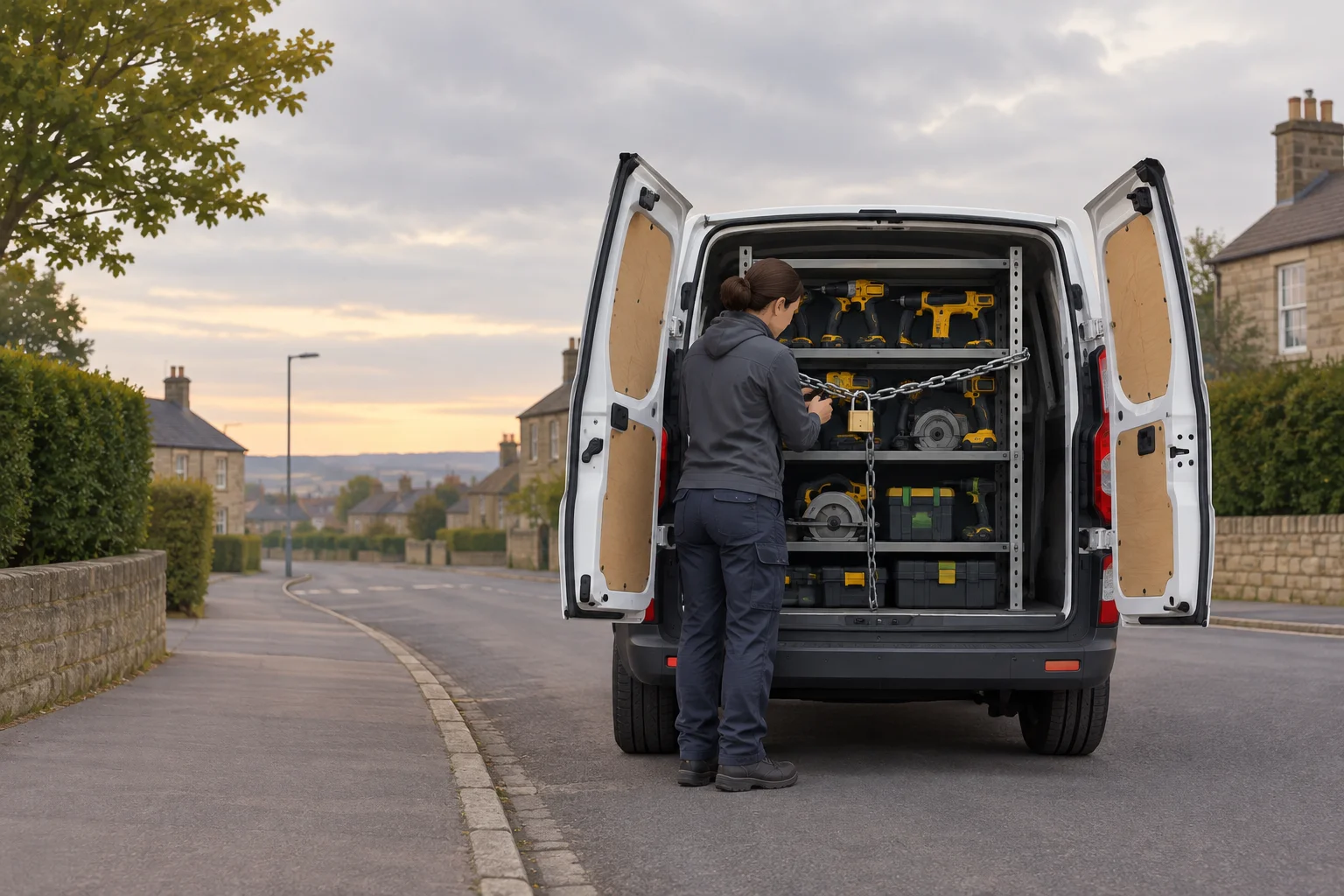
Your tools and test equipment are probably the most valuable thing you own after your van, and they often sit in that van overnight. If they go missing, you can't work until you've replaced them. That is the real cost of a theft, more than the kit itself. This post covers what tool cover usually includes and excludes, how to decide whether the premium is worth paying, and what to know about tax.
What tool insurance usually covers
Policies differ a lot, and there is no official UK standard for what they must include. So treat the points below as the usual pattern, not a promise. Always read the policy wording and the summary of cover before you buy.
Most tool and equipment policies are built to pay out if your tools are stolen, lost or damaged. Many also offer cover for tools kept in a van, at home or on a customer's site. Some add test equipment and specialist kit, or let you add them for a higher premium.
What it often leaves out
The exclusions are where most disappointment happens. Check each of these in the wording:
Unattended vehicles. Some policies only pay out if there are signs of forced entry, or if the tools were locked out of sight. Some set conditions on overnight storage.
Locks and security. A policy may require particular locks on the van or a lockable store at home.
Single-item limits. A cap per item can leave a pricey test meter or a power tool only partly covered.
Test equipment. Calibrated electrical testers are costly. Check they are named or included, and what limit applies.
Excess. This is the amount you pay on each claim. A high excess can make small claims pointless.
Wear and tear and mislaid items. Tools that wear out, or that you simply can't find, are commonly not covered.
Hired-in or customer-owned kit. Ask whether it is covered or excluded.
How to decide whether the premium pays off
Don't ask whether theft is likely. Ask whether you could cope with the loss. A simple way to work it out:
List everything you carry: hand tools, power tools, test equipment, ladders, consumables you keep in stock.
Put a replacement price next to each item, not what you paid. Replacing like for like is what you'd actually have to find.
Add it up. This is your total at risk.
Work out how long you could go without that kit, and what lost work would cost you in that time.
Compare the annual premium, plus the excess, with that total.
Here is an example with made-up figures. Say your kit would cost £6,000 to replace and you'd need a week of hire or borrowed tools while you waited, costing you £800 in lost jobs. If a policy costs £300 a year with a £250 excess, you are paying £300 to avoid a loss of around £6,800. If you could absorb that out of savings without trouble, you might self-insure. If you couldn't, cover is probably worth having. Only you can judge that.
Check other cover first
Some van policies or business packages already include a tools section, usually with a low limit. Find out what you already have before paying twice. Also remember that cover for injury to others is a different thing. For example, employers' liability insurance is about injury or disease suffered by employees, and the HSE says that if your business has employees you will probably need it. See HSE's guide to business insurance and its brief guide to the Employers' Liability (Compulsory Insurance) Act 1969. Tool cover does not replace either of these.
The tax side
The premium
Business insurance is an ordinary running cost. GOV.UK lists insurance among the financial costs you can claim as allowable expenses, so the premium for tool cover is normally claimable. You can't claim allowable expenses if you use the £1,000 tax-free trading allowance instead.
Insurance Premium Tax (IPT) is a tax on general insurance premiums and is usually included in the price you pay, so the quote you are given should already include it. See GOV.UK on Insurance Premium Tax.
A payout after a theft
How you claimed for the original tools matters. Under cash basis, items you buy and keep, such as tools, are claimed as allowable expenses. Under traditional accounting you claim capital allowances, and the SA103F notes include tools in plant and machinery. In most cases you can deduct the full cost through the Annual Investment Allowance.
HMRC's manual says a sum received under a policy insuring an asset against damage or loss is a capital receipt, and spending on repair, renewal or replacement may be an allowable deduction. But if you already claimed a deduction and then recover a capital sum for that same loss, the sum is included as a receipt in your taxable profits, up to the amount of the deduction. This comes from section 106 of the Income Tax (Trading and Other Income) Act 2005, as set out in BIM40755. In plain terms, you can't claim for the same tools twice.
The exact result depends on your accounting method and your circumstances. Speak to an accountant or check the GOV.UK pages before you put a payout in your records.
Before you buy
Ask for the policy wording, not just the summary.
Check how it treats tools left in a van overnight and what security it asks for.
Look at the single-item limit against your dearest kit, such as test equipment.
Check the excess and whether a few small claims would eat the benefit.
Ask what proof you need after a loss, such as receipts or serial numbers.
Keep receipts and photos of your tools, and write down serial numbers. They help with a claim and with your records. If you use Quidjob to keep your Making Tax Digital records, you can log tool purchases there as you go, so the figures are to hand if you ever need to claim.
Wrap-up
Tool insurance is worth it if losing your kit would hurt your income more than the premium does and the policy really covers how you store and use your tools. If a policy excludes your van overnight or caps your test equipment too low, it may not be worth buying. Add up your replacement cost, read the exclusions and decide from there.